
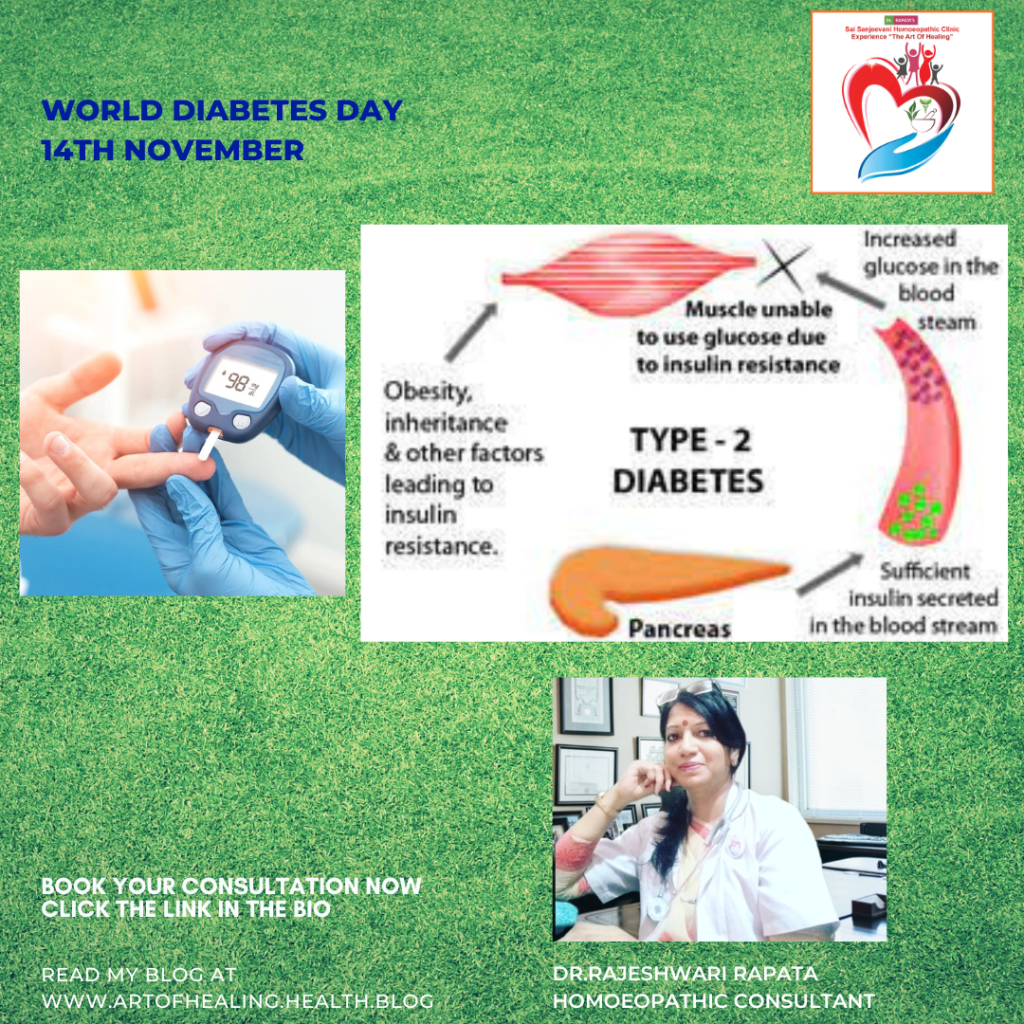
14 November is World Diabetes Day
Established in 1991 by the International Diabetes Federation with support from WHO in response to growing concerns about the health and economic threat posed by diabetes, World Diabetes Day became an official UN day in 2006.
World Diabetes Day 2022 Theme is ‘Access to diabetes education‘ is the theme of this year’s World Diabetes Day. The theme focuses on intensive diabetes education for healthcare professionals and diabetes patients.
Why is diabetes awareness important?
Across the globe, approximately 463 million adults are living with diabetes. Since prediabetes and type 2 diabetes may be prevented or delayed, raising diabetes awareness can educate people on possible symptoms and ways to reduce their individual risk.
AYUSH Homoeopathy is a naturopathic, complementory and Holistic treatment method which helps in Diabetes.
What is Diabetes?
Diabetes is a chronic (long-lasting) health condition that affects how your body turns food into energy.
Your body breaks down most of the food you eat into sugar (glucose) and releases it into your bloodstream. When your blood sugar goes up, it signals your pancreas to release insulin. Insulin acts like a key to let the blood sugar into your body’s cells for use as energy.
With diabetes, your body doesn’t make enough insulin or can’t use it as well as it should. When there isn’t enough insulin or cells stop responding to insulin, too much blood sugar stays in your bloodstream.
What are the types of Diabetes?
There are three main types of diabetes: type 1, type 2, and gestational diabetes (diabetes while pregnant).
Other types can be:
Surgically induced diabetes:
When surgery is performed on the pancreas for any reason, there’s a risk that its ability to produce insulin will change. This condition may be temporary or permanent. In this type of diabetes frequent testing of blood sugar is needed to monitor whether medications or insulin injections may be necessary.
Chemically induced diabetes:
Some types of medication can cause blood sugar level to be higher than normal. Steroids, specifically cortisone or prednisone, are the most common cause of chemically induced diabetes.
Latent autoimmune diabetes in adults (LADA):
Important blood sugar levels:
- Fasting blood sugar (FBS)-70-100mg/dl-Normal
- FBS-101-126mg/dl-Early diabetes
- FBS-more than 126mg/dl-Diabetes
- FBS-below 70mg/dl-Hypoglycemia
- FBS-less than 50mg/dl-Insulin shock
- Post prandial blood sugar (PPBS)-70-140mg/dl-Normal
- PPBS-140-200mg/dl-Early diabetes
- PPBS-more than 200mg/dl-Diabetes
- Random blood sugar (RBS)-70-140mg/dl-Normal
- RBS-more than 200mg/dl-Diabetes
Type 1 Diabetes
Type 1 diabetes is thought to be caused by an autoimmune reaction (the body attacks itself by mistake). This reaction stops your body from making insulin. Approximately 5-10% of the people who have diabetes have type 1. Symptoms of type 1 diabetes often develop quickly. It’s usually diagnosed in children, teens, and young adults.. Currently, no one knows how to prevent type 1 diabetes. Type 1 diabetes, once known as juvenile diabetes or insulin-dependent diabetes, is a chronic condition. In this condition, the pancreas makes little or no insulin. Insulin is a hormone the body uses to allow sugar (glucose) to enter cells to produce energy.
Different factors, such as genetics and some viruses, may cause type 1 diabetes. Although type 1 diabetes usually appears during childhood or adolescence, it can develop in adults.
Even after a lot of research, type 1 diabetes has no cure. Treatment is directed toward managing the amount of sugar in the blood using insulin, diet and lifestyle to prevent complications.
Symptoms:
Type 1 diabetes symptoms can appear suddenly and may include:
- Feeling more thirsty than usual
- Urinating a lot
- Bed-wetting in children who have never wet the bed during the night
- Feeling very hungry
- Losing weight without trying
- Feeling irritable or having other mood changes
- Feeling tired and weak
- Having blurry vision
When to see a doctor
Talk to your health care provider if you notice any of the above symptoms in you or your child.
Type 1 diabetes complications can affect major organs in the body. These organs include the heart, blood vessels, nerves, eyes and kidneys. Having a normal blood sugar level can lower the risk of many complications.
Diabetes complications can lead to disabilities or even threaten your life.
- Heart and blood vessel disease. Diabetes increases the risk of some problems with the heart and blood vessels. These include coronary artery disease with chest pain (angina), heart attack, stroke, narrowing of the arteries (atherosclerosis) and high blood pressure.
- Nerve damage (neuropathy). Too much sugar in the blood can injure the walls of the tiny blood vessels (capillaries) that feed the nerves. This is especially true in the legs. This can cause tingling, numbness, burning or pain. This usually begins at the tips of the toes or fingers and spreads upward. Poorly controlled blood sugar could cause you to lose all sense of feeling in the affected limbs over time.
Damage to the nerves that affect the digestive system can cause problems with nausea, vomiting, diarrhea or constipation. For men, erectile dysfunction may be an issue.
- Kidney damage (nephropathy). The kidneys have millions of tiny blood vessels that keep waste from entering the blood. Diabetes can damage this system. Severe damage can lead to kidney failure or end-stage kidney disease that can’t be reversed. End-stage kidney disease needs to be treated with mechanical filtering of the kidneys (dialysis) or a kidney transplant.
- Eye damage. Diabetes can damage the blood vessels in the retina (part of the eye that senses light) (diabetic retinopathy). This could cause blindness. Diabetes also increases the risk of other serious vision conditions, such as cataracts and glaucoma.
- Foot damage. Nerve damage in the feet or poor blood flow to the feet increases the risk of some foot complications. Left untreated, cuts and blisters can become serious infections. These infections may need to be treated with toe, foot or leg removal (amputation).
- Skin and mouth conditions. Diabetes may leave you more prone to infections of the skin and mouth. These include bacterial and fungal infections. Gum disease and dry mouth also are more likely.
- Pregnancy complications. High blood sugar levels can be dangerous for both the parent and the baby. The risk of miscarriage, stillbirth and birth defects increases when diabetes isn’t well-controlled. For the parent, diabetes increases the risk of diabetic ketoacidosis, diabetic eye problems (retinopathy), pregnancy-induced high blood pressure and preeclampsia.
Prevention:
There’s no known way to prevent type 1 diabetes. But researchers are working on preventing the disease or further damage of the islet cells in people who are newly diagnosed.
Ask your provider if you might be eligible for one of these clinical trials. It is important to carefully weigh the risks and benefits of any treatment available in a trial.
Homoeopathy gives hope to prevent the side effects of some treatments and helps relieve the symptoms of the disease.
Type 2 Diabetes
With type 2 diabetes, your body doesn’t use insulin well and can’t keep blood sugar at normal levels. About 90-95% of people with diabetes have type 2. It develops over many years and is usually diagnosed in adults (but more and more in children, teens, and young adults). You may not notice any symptoms, so it’s important to get your blood sugar tested if you’re at risk. Type 2 cannot be cured but there is evidence to say in many cases it can be prevented and put into remission.
Type 2 diabetes can be prevented or delayed with healthy lifestyle changes, such as:
- Losing weight.
- Eating healthy food.
- Being active.
- Taking naturopathic/ Homoeopathic medicines to control it.
Symptoms Signs and symptoms of type 2 diabetes often develop slowly. In fact, you can be living with type 2 diabetes for years and not know it. When signs and symptoms are present, they may include:
- Increased thirst
- Frequent urination
- Increased hunger
- Unintended weight loss
- Fatigue
- Blurred vision
- Slow-healing sores
- Frequent infections
- Numbness or tingling in the hands or feet
- Areas of darkened skin, usually in the armpits and neck
When to see a doctor
See your doctor if you notice any signs or symptoms of type 2 diabetes.
Gestational Diabetes
Gestational diabetes develops in pregnant women who have never had diabetes. If you have gestational diabetes, your baby could be at higher risk for health problems. Gestational diabetes usually goes away after your baby is born. However, it increases your risk for type 2 diabetes later in life. Your baby is more likely to have obesity as a child or teen and develop type 2 diabetes later in life.
What is the main difference between Type 1 and Type 2 Diabetes?
The main difference between the type 1 and type 2 diabetes is that type 1 diabetes is a genetic condition that often shows up early in life, and type 2 is mainly lifestyle-related and develops over time. With type 1 diabetes, your immune system is attacking and destroying the insulin-producing cells in your pancreas.
Although type 1 and type 2 Diabetes both have things in common, there are lots of differences too. Like what causes them, who they affect, and how you should manage them. For a start, type 1 affects 8% of everyone with diabetes. While type 2 diabetes affects about 90%.
What are the Complications of Diabetes ?
Even though diabetes can lead to other health problems, you can prevent or delay these complications in many ways. Common diabetes health complications include heart disease, chronic kidney disease, nerve damage, and other problems with feet, oral health, vision, hearing, and mental health. Learn how to prevent or delay these diabetes complications and how to improve overall health.
You might hear your healthcare team talk about two types of diabetes complications: serious ones that build up over time called chronic complications and ones that can happen at any time called acute complications.
Chronic complications:
These are long-term problems that can develop gradually, and can lead to serious damage if they go unchecked and untreated.
Eye complications: (retinopathy)
Some people with diabetes develop an eye disease called diabetic retinopathy which can affect their eyesight. If retinopathy is picked up – usually from an eye screening test – it can be treated and sight loss prevented.
Foot problems:
Diabetes foot problems are serious and can lead to amputation if untreated. Nerve damage can affect the feeling in your feet and raised blood sugar can damage the circulation, making it slower for sores and cuts to heal. That’s why it’s important to tell your GP if you notice any change in how your feet look or feel.
Heart Attack and stroke:
When you have diabetes, high blood sugar for a period of time can damage your blood vessels. This can sometimes lead to heart attacks and strokes.
Kidney problems: (nephropathy)
Diabetes can cause damage to your kidneys over a long period of time making it harder to clear extra fluid and waste from your body. This is caused by high blood sugar levels and high blood pressure. It is known as diabetic nephropathy or kidney disease.
Nerve Damage:(neuropathy)
Some people with diabetes may develop nerve damage caused by complications of high blood sugar levels. This can make it harder for the nerves to carry messages between the brain and every part of our body so it can affect how we see, hear, feel and move.
Gum Disease and other mouth problems:
Too much sugar in your blood can lead to more sugar in your saliva. This brings bacteria which produces acid which attacks your tooth enamel and damages your gums. The blood vessels in your gums can also become damaged, making gums more likely to get infected.
Related diseases like cancer:
If you have diabetes, you’re more at risk of developing certain cancers. And some cancer treatments can affect your diabetes and make it harder to control your blood sugar.
Sexual problems in women:
Damage to blood vessels and nerves can restrict the amount of blood flowing to your sexual organs so you can lose some sensation. If you have high blood sugar, you are also more likely to get thrush or a urinary tract infection.
Sexual problems in men:
The amount of blood flowing to your sexual organs can be restricted which may cause you to have difficulty getting aroused. It may lead to erectile dysfunction, sometimes called impotence.
These can happen at any time and may lead to chronic, or long-term, complications.
- Hypoglycemia – when your blood sugars are too low
- Hyperglycemia– when your blood sugars are too high
- Hyperosmolar Hyperglycemic state: a life-threatening emergency that only happens in people with Type 2 diabetes. It’s brought on by severe dehydration and very high blood sugars.
- Diabetic Ketoacedosis (DKA) – a life-threatening emergency where the lack of insulin and high blood sugars leads to a build-up of ketones.
What causes complications associated with diabetes?
High sugar levels in your blood over a long period of time can seriously damage your blood vessels. If your blood vessels aren’t working properly, blood can’t travel to the parts of your body it needs to. This means your nerves won’t work properly either and means you lose feeling in parts of your body. Once you’ve damaged the blood vessels and nerves in one part of your body, you’re more likely to develop similar problems in other parts of your body. So if your feet are damaged, serious heart problems can follow.
We know that the higher your HbA1c level, the more you’re at risk of developing complications. HbA1c is glycated haemoglobin. This is made when glucose, which we call sugar, sticks to your blood cells and builds up in your blood. It’s measured by a blood test that shows your average blood sugar levels over the last three months. A high HbA1c means you have too much sugar in your blood. Even a slightly high HbA1c increases your risk.
But it’s not just about blood sugars. High blood pressure, smoking and a lot of fat in your blood (cholesterol) can all damage your blood vessels and put you even more at risk.
How do I prevent or delay complications?
They’re not inevitable. Keeping Blood sugar, Blood Pressure and Blood fats under control will hugely help to reduce your risk of developing complications. This means going to your diabetes health checks and finding out from your diabetes healthcare team how to look after yourself between appointments.You can prevent or delay the complications of diabetes. But you need to take action and it’s all about managing your diabetes well.
Manage your diabetes :
Keeping your HbA1c within the target range set by your healthcare team is really important for reducing your risk complications. If your blood sugar levels are rising, talk to your doctor. Your treatment may need to change to get your HbA1c back in target to avoid the complications of high blood sugar.
Stop smoking :
Smoking makes it harder for blood to flow around your body to places like your heart and your feet. If you smoke, then stopping is a key part of reducing your chances of complications. Again, your Family physician, your Homoeopath and diabetes team will be able to help you quit.
Eat more healthily :
Making Healthier food choices can help you to lose weight, bring down your HbA1c, manage your blood pressure and help you reduce the fats in your blood like cholesterol. Ask to see a dietitian if you’d like extra help to eat healthily.
Keep active :
Doing more physical activity helps reduce your chance of getting complications. If you struggle to get about, there are still ways you can keep active. We’ve got lots of type 2. Manage by monitoring and adjusting to it is the key.
Go to all of your appointments :
Everyone with diabetes is entitled to a series of health tests and checks, each year to monitor their diabetes, look out for any problems and see if any further support is needed. Making sure you get all of them will mean you know how you’re doing and about your type 1 and type 2 diabetes health risks.
What if I have chronic complications: When you have one chronic complication. you’re much more at risk of developing other complications of diabetes. So if your blood vessels are damaged in your feet for example, the damage can happen to other parts of your body like your kidneys and heart too. This means you need to stay on top of your health checks and blood sugar levels when you’re managing other problems.
This is serious, that’s why we want you to have all the facts so you can prevent complications from getting worse. Moreover it masks the pain and and underlying disease. It becomes a silent killer.
How does Homoeopathy treat diabetes?
There are effective homoeopathic medicines to keep your diabetes in control as well to treat the acute and chronic complaints. They are safe and can be taken along side with allopathic or surgical treatments. Homoeopathic medicines are given in potentised pills and mother tinctures after taking a detailed history. According to Homoeopathic principles, The suffering person is a complete individual with mind body and soul and the totality of suffering is considered right from the beginning of the disease. The root cause of the symptoms is found out to treat the disease.
Diabetes is well controlled and many clients were reversed of the diabetes. The insulin was withdrawn after control. Many symptoms were well controlled and relieved after homoeopathic treatment and life style management.
Diabetic foot complications, gangrene were effectively treated to prevent amputation.
Homoeopathic medicines for Diabetes:
1.Abroma Augusta:
It is the most popular diabetes medicine in homeopathy. The doctor prescribes Abroma Augusta to diabetic patients who feel extreme weakness due to loss of muscle weight. While walking is extremely important, muscle-building exercises go a long way in reversing your diabetes. A Personal Fitness Coach along with a Diet Coach can help you gain muscle weight by providing a perfect workout regimen and the best diet plan, customized according to your body requirements and without hampering your daily routine. It is also beneficial for patients experiencing thirst with dryness in the mouth, frequent urination, and an increased appetite. Many diabetes patients suffer from sleeplessness also due to high blood sugar levels. Abroma Augusta is helpful to them also.
2.Syzygium Jambolanum:
Ithelps in reducing blood sugar levels. It treats the symptoms of diabetes like thirst, weakness, and excessive urination. Administer this medicine at suitable intervals to maintain your blood sugar levels to normal. It helps in the diminution of sugar in urine and treating diabetes-related old ulcers of the skin. You need to take 15 drops of Syzygium jambolanum mother tincture in half a glass of water, 10 minutes before every meal.
3.Acid phos:
It treats diabetes if it is of nerve origin. The homeopathic doctor may prescribe phosphoric acid when diabetes patients suffer from frequent urination and severe exhaustion. Along with that, if the urine color is milky, it indicates a high amount of sugar in the urine. Phosphoric acid can treat diabetes when it is in the rudimentary stage.
4.Bryonia: Bryonia is used in patients with dry lips associated with diabetes mellitus. It is indicated in patients with bitter taste, no excess appetite or thirst, and low spirited. It is used for indications like excess thirst, increased frequency of urine, Rheumatic and Arthritic complaints, constipation with light-colored stool, and liver disorders.
5.Opium: Diabetes and excessive sleep, gestational diabetes, Post partum depression. When Metformin stops working,Opium helps in normalising and controlling the blood sugar.
6.Gymnema sylvestre: Also known as ‘gurmar‘ that means the destroyer of sugar. Gymnema sylvestre may help you fight sugar cravings and lower high blood sugar levels. It may also play a beneficial role in diabetes treatment, as it may help stimulate insulin secretion and the regeneration of pancreas islet cells — both of which can help lower blood sugar. It is also used for loss of sexual power. It reduces the risk of heart disease and helps maintain a healthy weight.
7.Insulinum:
Besides the use of Insulin in the treatment of diabetes, restoring the lost ability to oxidize carbohydrate and again storing glycogen in the liver, Some use of it homeopathically has been made by Dr.Wm.F.Baker, showing its applicability in acne, carbuncles, erythema with itching eczema. In the gouty, transitory glycosuria when skin manifestations are persistent give three times daily after eating. Given a persistent case of skin irritation, boils or varicose ulceration with polyuria, it is indicated. (Boericke) It has good results and controlling diabetes and reversal of type 2 diabetes. Insulin withdrawal and reduction is possible within short time.
8.Uranium Nitricum:
It is a diuretic homeopathic remedy for diabetes. It helps to treat urination with incontinence of urine, enuresis, and burning in the urethra due to a rise in blood glucose levels. Uranium Nitricum homeopathic medicine helps treat high blood sugar levels, high blood pressure, and fatty liver conditions. Take the dosage of Uranium nitricum only after the prescription of a doctor. Altering your eating and sleeping habits can also work wonders to regulate your blood sugar levels. Regular follow-up from lifestyle coaches can help you attain your goal faster.
9.Conium:
Conium can treat numbness of feet and hands and nerve damage due to high blood sugar levels. It also treats muscular weakness in the lower part of your body. Conium is also known as poisonous hemlock. It is highly toxic. Though conium does not affect the intellectual part of the body, it acts feebly on the spinal cord. Therefore, it helps in treating neuromuscular problems due to high glucose levels. It promotes better sleep and helps in relieving the pain due to neuropathy.
10.Chephalandra Indica:
It effectively treats blood urea and helps in maintaining blood sugar level. Given for diabetes mellitus and diabetes insipidus, For poisonous boils, abscess, and carbuncles, Giddiness, Dryness of mouth with excessive thirst, Burning pains all over the body, Profuse urination and severe exhaustion after urination, Severe headache on exposure to the sun, Jaundice, Chronic fever with burning in the eyes, Edema and water retention in the body.,Hemorrhage or bleeding in the stomach
11.Nat Phos:
It helps to treat digestive disorders and thereby reduces blood sugar levels. Natrum Phos 3x has a positive effect as a stand-alone remedy or adjunct with other homeopathic remedies for diabetes patients. It is available as a biochemical tablet.
12.Nat Mur:
High blood sugar is also a result of an imbalance of your body fluids. Natrum Mur helps in promoting and maintaining a healthy balance in your body. Therefore, your kidneys work smoothly to flush out the excess glucose from your body thereby, keeping your blood sugar levels in control.
13.Phosphorus:
Phosphorus is a compound suitable for patients with high blood sugar levels and pancreatic diseases, especially tuberculosis. Diabetes patients having the symptoms like dry mouth, restlessness, dry and watery stool gain benefits from phosphorus as the diabetes medications. It is given as a constitutional medicine. Weakness of vision in a diabetic patient
14.Arsenic alb:
Diabetic gangrene. Burning and soreness , relieved by warmth. Fetid smell from the wound. Restlessness. diabetes nephropathy. Urine is scanty, burning when urinating. Albuminuria. Epithelial cells, cylindrical clots of fibrin and globules of pus and blood in urine. Feeling weakness in abdomen after urination. Retention of urine. Urine black as if mixed with dung.
15.Curare:
Useful adjuvant in treatment of diabetes. Arms feel weak and heavy. Tired feeling with pains going up and down the spine.
16.Lactic acid:
It is helpful for treating gastrohepatic type of diabetes. The symptoms that will have to be present in the patient include light yellow coloured urine, Dry skin and tongue, thirst, Nausea and costive bowels.
17.Lac deflor:
Diabetes, albuminuria and other affections of the kidneys. “mental depression and weeping”, the “thirst for large quantities and often”, the “periodical headache increasing and decreasing with the sun”, the “obstinate constipation and fissure pain” Excessive flow of urine, either of high specific gravity, or colorless, watery, low specific gravity, but in both cases strongly impregnated with sugar. Urinates profusely every half hour, urine perfectly colorless, specific gravity 1005 ; Trommer’s test showed sugar.
18.Lycopodium:
Effective remedy for diabetic nephropathy. Urine scanty , cries before urinating, red sand in urine, must strain, suppressed or retained. Urine milky and turbid. Sometimes haematuria.
19.Phaseolus: Diabetes with heart disease
Disclaimer: This article is only for health education and awareness purposes. Homoeopathic medicines are given only after detailed case history taking to find out the constitutional and miasmatic remedy. It can be single remedy or combined with mother tinctures, biochemic tissue remedy, Bach flower remedies or ointments as required for the symptoms of the disease. Please note that these homoeopathic medicines mentioned in the article are indicative and should not be self prescribed and bought on the counter. Consult a qualified homoeopathic doctor for detailed case taking. Treatment and medicine prescription.
Book consultation using this link.
 The Art Of Healing