
Watch on the You tube channel, The Art of Healing
Do you know there are many famous people who had ADHD and have triumphed over it?
Right from Albert Einstein, Jim Carrey, Bill Gates to Michael Jordan, There are hundreds of people who were diagnosed with ADHD but they became highly successful in their later life.
Your child is just extraordinary and you are blessed. You need to identify it in early stage and give extra attention and care just as we care for diamonds and precious things.
This article will throw light on how Homoeopathy works for ADHD.
Go through this link : https://www.ranker.com/list/famous-people-with-adhd/celebrity-lists
ADHD stands for attention deficit hyperactivity disorder, a condition with symptoms such as inattentiveness, impulsivity, and hyperactivity. The symptoms differ from person to person. ADHD was formerly called ADD, or attention deficit disorder. Both children and adults can have ADHD, but the symptoms always begin in childhood. Adults with ADHD may have trouble managing time, being organized, setting goals, and holding down a job.
ADHD and Tourette’s syndrome are two separate conditions, but they have a few things in common. They often start around the same age, and in some cases children can have both conditions.
But there are some key differences between them. It’s important to get the right diagnosis for your child.
The main symptom of Tourette’s syndrome is repeated movements or sounds, called TICS, that a person can’t control. They can be simple, like constant eye blinking, sniffing, grunting, or coughing. They can also be complex, like shoulder shrugging, facial expressions, head movements, or repeating words or phrases. The tics usually happen several times each day.
Sometimes, kids with ADHD can have symptoms that seem a lot like tics. They might fidget, squirm, or make random noises as if they are being silly. Sometimes kids who take a type of ADHD medicine called stimulants might have tics. The drugs don’t cause them, but they may make them noticeable. And they often go away on their own.
Homeopathic treatment for ADHD works very well to treat behavioral and cognitive functioning in children, as proved by clinical trials for the same. Working on the principle of ‘like cures like,’ homeopathy treats the symptoms of inattention, mood disorders and hyperactivity (all associated with Attention Deficit Hyperactive Disorder) by stimulating the child’s mind towards development.
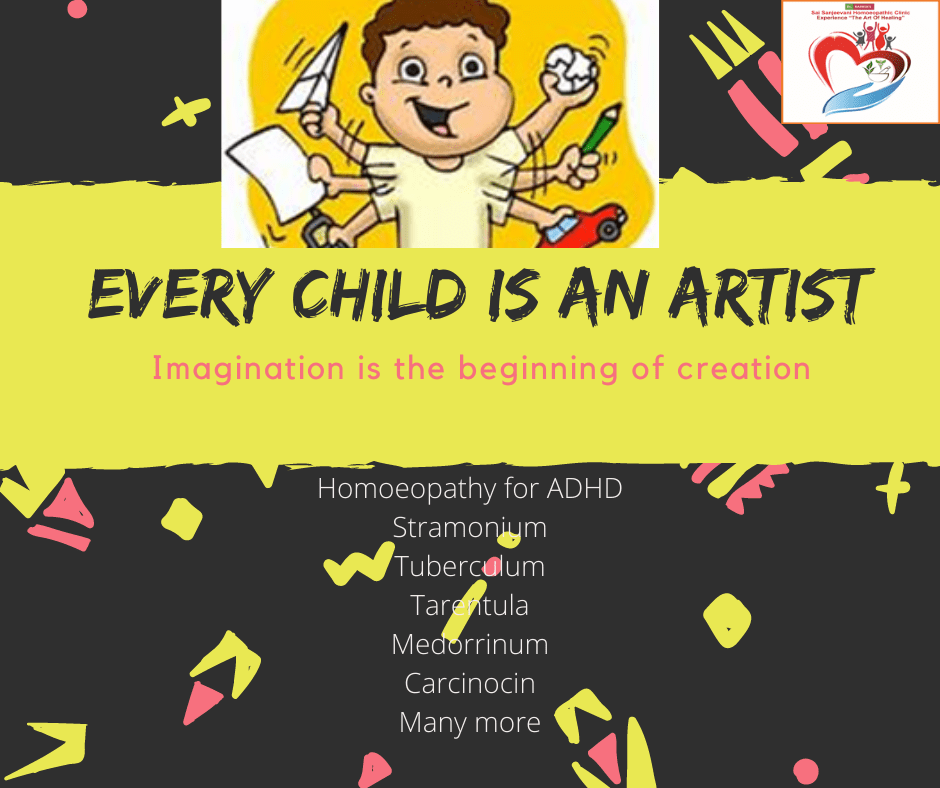
Children (especially those in their early developmental years) who are always restless and face problems with concentration show a good response to natural homeopathy medicines for ADHD like Tarentula, Carcinosin, and Tuberculinum. These medicines are deep acting remedies that help improve memory and concentration and also reduce hyperactivity in children with ADHD. For example, Tarentula is used to treat ADHD in children with classic symptoms like constant motion, restlessness, and destructive behavior, while Stramonium is a proven remedy that helps curb excessive hyperactivity.
While the conventional system of medicine relies on stimulants and antidepressants to treat the symptoms of ADHD, these do not treat the problem. They merely mask the symptoms, and the child often has to suffer through other side effects. As a holistic treatment for ADHD, homeopathy works upon improving the brain function rather than curbing the symptoms. These medicines are safe and have no side effects, and the correct remedy can help treat all associated problems like allergies or recurrent physical issues along with hyperactivity and inattention in kids.
Since these medicines work symptomatically, they offer a highly individualized cure. A child with problems of inattention is vastly different from a child who likes to throw tantrums, and a homeopath would treat these two cases differently.
Natural Homeopathic Remedies for ADHD (Attention Deficit Hyperactivity Disorder) in Children
1. Tarentula Hispanica – Top Medicine for ADHD
Tarentula Hispanica is a highly ranked medicine for ADHD. It is highly effective in children who are hyperactive, in constant motion and cannot remain in one place quietly. Inattentiveness and marked impatience, a restlessness of hands and legs, sudden impulsive, destructive behavior are other classic symptoms. The child may strike himself and others, tear the clothing, throw things away, and generally be destructive. He may be quite talkative also and tend to speak abruptly. Excessive screaming, shrieking, tendency to use abusive language, tendency to steal things and be cross, irritable and angry often are also signs that indicate the need for this medicine. A characteristic feature that may be noted with the above features is a great excitement induced by listening to music.
2. Carcinosin – For Concentration and Memory
Carcinosin is a highly effective medicine for ADHD where the child shows extreme hyperactivity and restlessness. The child remains in constant motion. He keeps on running, jumping, climbing here and there. The child is difficult to be seated in one place and is usually impatient. Such children tend to get bored easily, are highly inattentive and have difficulty with concentration. Anxiety and fears may also prevail among them. Fears like that of the dark and being alone are commonly noted. They may also have restless sleep.
3. Tuberculinum Bovinum – For Hyperactivity, Concentration Difficulty, and Destructiveness
Tuberculinum Bovinum is a natural medicine for ADHD where the child is hyperactive, restless and always seems to have too much energy. Such children can’t slow down to learn anything and face difficulty while doing tasks that need concentration. Another marked feature that indicates the need for this medicine is destructiveness with a desire to break things. Other attending symptoms include irritability, stubbornness, and fretfulness. They also are argumentative and tend to use foul language, want to fight, and have fits of violent temper tantrums. Tuberculinum Bovinum is also useful in children with ADHD who suffer from learning disabilities.
4. Hyoscyamus Niger – For ADHD with Hyperactivity and Excessive Talking
Hyoscyamus Niger is an effective natural cure for ADHD. This medicine is prepared from the plant called Henbane. The natural order of this plant is Solanaceae. The child requiring this medicine shows hyperactivity and is extremely restless physically. He tends to move from one place to another, and his movements are very quick. The child is inattentive and lacks concentration. While studying, he may use inappropriate words and sentences or make up irrelevant answers. He is also very talkative and impatient and may talk absurdly. Some children also tend to make constant unintelligible chattering. Emotional outbursts may be present with the above symptoms. The child may cry out suddenly or break into a loud laugh. He may show violent behavior like – scratching, striking, biting, and injuring those around him. He may insult, shout, scold, abuse and spit on people. He may make ridiculous gestures and is often seen to play with his fingers.
5. Stramonium – For ADHD with Marked Hyperactivity
Stramonium is prepared from the plant called Thorn Apple. This plant belongs to family Solanaceae. The child is very hyperactive and restless. He sits down, rises, kneels, rolls, creeps or takes other strange positions. He may also continually move his hands and arms. He does everything hastily and hurriedly. He is inattentive, cannot connect a sentence, is unable to give a proper answer, and cannot find the right words.
The child is loquacious, disposed to talk continually. He sings, makes verses, shrieks, screams, howls, and groans. He is impulsive and violent too. He may tear his clothes, destroys things, and attempt to bite those who come near him.
6. Veratrum Album – For ADHD with Violent, Impulsive and Destructive Behaviour
Veratrum Album is prepared from the plant named White Hellebore of the natural order Melanthaceae of the Liliaceae family. It is indicated in cases of ADHD where the child shows violent, impulsive and destructive behavior. During violent outbreaks, the child strike those around him, tears things up has an impulse to bite. Hyperactivity with a desire to wander about the house is also present. Excessive rapid, constant talking, at times with loud laughter, may also be present. The child may also have a habit of telling lies.
7. Chamomilla – For ADHD Related Mood Disorders
Chamomilla is an effective remedy prepared from a plant called Matricaria Chamomilla. Chamomilla is suitable for argumentative, ill-humored and irritable children. They are fretful, obstinate, cranky, cross, snappish, insulting, who cannot answer patiently. They cannot bear anyone near them and are averse to talking. Along with this, they are full of anxiety and restlessness. They are very impatient and, everything seems to go too slowly for them. They also show agitation and are always tossing, groaning. Use of Chamomilla is also considered in cases of ADHD attended with ODD (Oppositional Defiant Disorder).
8. Cina – For Children who are Irritable, Fretful, and Cross
Cina is prepared from the plant named Cina Maritima from the natural order Composite. Cina is another excellent medicine for ADHD in kids who are irritable, fretful and cross. They are always complaining about everything. They cannot bear anyone near them. They are not satisfied by anything, desire many things (which they refuse to accept when offered), and throw away everything given to them. They are highly cross, get offended easily and strike those around them. They are very restless even during sleep and keep on tossing about in bed.
9. Medorrhinum – When the Child is Restless and Hurried and has Difficulty with Concentration
Medorrhinum is useful medicine for ADHD when the child is restless, hurried and has difficulty concentrating on things. He loses the thread of conversation, seems very anxious, and has severe mood swings. One moment the child is happy, the other moment he is sad. Such children also tend to be hyperactive, impulsive, abrupt and abusive towards others.
10. Merc Sol – For ADHD with Hyperactivity at Night
Merc Sol is an important medicine for ADHD with hyperactivity that is especially marked during the night. The child is restless, continually moves from one place to another, has a hurried speech, and tends to be anxious and ill-humored. The child may show poor self-confidence along with the above symptoms.
Note: The given medicines are indicative only. Self prescription is harmful. Consult a Homoeopath for your conditions.
The Cause behind ADHD (Attention Deficit Hyperactivity Disorder)
The exact reason behind ADHD is not known yet. However, certain risk factors tend to contribute to ADHD. These factors include genetic factors (family history of ADHD raises the risk), smoking /alcohol use/drug use by the mother during pregnancy, brain damage from an injury, childhood exposure to toxins such as lead and arsenic, chemical food additives such as artificial coloring, food preservatives; artificial sweetness and food allergies, premature birth or a low birth weight, and epilepsy.
Symptoms of ADHD (Attention Deficit Hyperactivity Disorder)
The main symptoms of ADHD include inattention and hyperactive-impulsive behavior.
The symptoms of inattention include difficulty in focusing attention while studying, playing or while other things, making careless mistakes in study or other activities, getting easily bored and distracted, losing items like toys, pencils, etc; being too absorbed and not listening to others, daydreaming, having problems with following instructions, and avoidance of activities that need attention.
The symptoms of hyperactivity include difficulty with sitting still, constant movement or running around, tapping of hands or feet, talking too much, interrupting others in between their conversation, impatience with difficulty waiting for a turn and difficulty in doing tasks quietly.
Other symptoms that can accompany the above in ADHD include frequent mood swings, sudden anger, emotional outbursts, anxiety, and sleeplessness.
Some children may also have signs of other conditions alongside ADHD (Attention deficit hyperactivity disorder), such as anxiety disorder, learning problems like dyslexia, and Tourette’s syndrome (a neurological disorder involving motor and vocal tics). Children having Tourette’s syndrome have two or more motor (movement-related) tics and at least one vocal (sound related) tic in combination.
ODD or oppositional defiant disorder is another behavioral disorder in which a child shows angry, irritable mood and argumentative, vindictive behavior towards adults or authority figures. Conduct disorder is a group of emotional and behavioral problems that begin during childhood or adolescence. Significant features include aggressive conduct, deceitful behavior, destructive behavior, violation of rules, and antisocial behavior.
Whether your child with ADHD is young or a teen, you can show them you’re firm but fair (and fun) by doing two key things.
- Encourage good behavior with praise or rewards immediately.
- Make consequences for bad behaviour clear, understood, and consistent.
Your approach will depend on your child’s age.
Preschoolers (Age 5 and Younger)
Organize the day. Have a routine. Let your child know if it’s changing or if something unusual is going to happen, like a visit from a relative or a vacation.
Set rules and expectations. It’s best to do this right before an activity or situation.
Use rewards. If your child does something you’re proud of, give them a gold star, or give them time for their favorite hobby. Try not to use money, food, or candy for rewards.
Engage your child with mind-building activities, such as reading, games, and puzzles. Join in!
Use a timer. Some parents find this helps build structure. For example, set a reasonable time limit for a bath or playtime. It helps train your child to expect limitations, even on fun things. Give your child a time limit for doing a chore, too, especially if you reward them for finishing on time.
Children Ages 6-12
Explain and instruct. Give clear instructions for tasks. If a chore is hard or lengthy, break it down into steps that can be done one at a time.
Reward your child for good behavior and tasks completed. Have a clear system for incentives (like a point system or gold stars) so your child knows what to expect when they finish a chore or behave better. Be consistent with your expectations, and always follow through with rewards.
Make a plan for discipline. Set up a specific consequence for a certain misbehavior. Be consistent and fair about enforcing it. Try not to discipline your child in front of others.
Talk regularly with your child’s teachers, so you can deal with any behavior concerns before they become a major problem.
Walk your talk. Set a good example for your child. Children with ADHD need role models for good behavior.
Teens
Involve them. As your child matures, let them help set expectations, rewards, and consequences. This empowers them, which may improve their self-esteem and reinforce the idea that they’re in charge of their own behavior. This will also help them become more responsible as they move toward young adulthood.
Discipline in private. Teenagers are often sensitive of how they appear to others. So they may overreact or feel ashamed if you discipline them in public. The teen years can be tough for any kid, so be gentle and understanding. Talk with them about any issues they’re having.
Talk with your teen’s teachers when issues in the classroom come up. Talk with your child, too. Make a plan to deal with it, together.
Be predictable. Be consistent and fair with how you act. That way, your teen knows what to expect from you.
Set a good example. Teens don’t always show it, but the adults in their lives are very influential and important to them.
Get Help
All parents find themselves frustrated and exhausted at times, Raising a child with ADHD has its own set of challenges. It’s natural to have needs and questions.
When you’re feeling overwhelmed, talk to someone about it. Look for a support group, or see a professional to help you deal with your emotions and reactions so you can be a more effective parent. Family counseling may help, too.
Occupational therapy, Cognitive behavioural therapy, Music, Dance and Art therapy also help in reducing the span of treatment and early improvement.
 The Art Of Healing