
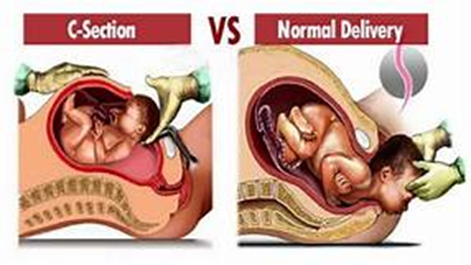
Is caesarean section medically justified ? Many people have this question and they are skeptic about the work of the obstetrician and the concerned doctors.
Too many women in India are having cesarean sections—and it’s everybody’s fault.
World Health Organization (WHO) report, A report (pdf) by the ICMR School of Public Health, A Study (Jan 2007 to Dec 2012)
You will ask me How it can be justified ?
Until 2010, cesarean—or C-sections—were limited to 8.5% of all deliveries in the country, just under the recommended level of 10-15%, according to a World Health Organization (WHO) report (pdf). The WHO guidelines take into account the number of C-sections needed for complicated births and curbing maternal mortality rates, so even too few procedures will be a problem.
But in the last decade , According to a report (pdf) by the ICMR School of Public Health, the numbers have escalated in many parts of the country—reaching as high as 41% of deliveries in Kerala, and 58% in Tamil Nadu And it’s happening across both urban and rural areas: Mumbai saw an exponential growth in C-sections in both private and public hospitals, while one study (Jan 2007 to Dec 2012) demonstrated a spike from 31% to 51% over just six years in rural Haryana.
Meenakshi Gautham, the India country coordinator for a maternal and newborn health program at the London School of Hygiene and Tropical Medicine said Private hospitals tend to be the most scalpel-happy when it comes to these of C-section procedures.
In India, the cost of a C-section varies widely. The variation depends on many factors too like the geographical area, accreditations of the hospital, facilities, public or private criteria.
Fighting the trend
Amid this financial setting, some doctors are hoping to fight that trend and bring down the number of unnecessary C-sections.
There are many doctors who charge patients a flat, equal fee for both C-sections and vaginal births.
“Of course, there are some bad eggs in every profession,” Obstetricians trying to make money from C-sections like in any other profession. No doubt the term Patient is changed to client in the new medicolegal terminology and consumer courts to the disadvantage or advantage of the concerned.
Patient wishes
But the decision is not just in the hands of a physician. From patients who want to deliver on auspicious dates, to those who just want to avoid the pain during labour, Patients come with their own set of beliefs and biases.
“The culture we have in India—word of mouth has a bigger say and bigger hold than medical knowledge sometimes,”
This trend, however, is hardly specific to India. In China, where almost 50% of the mothers deliver through C-section, patient preference plays a large part in the high numbers of procedures.
Counselling and education go a long way to combat these myths, if women are actually given enough information, they can make the right decision.”
Health risks
Few don’t bother to explain and counsel and Few of the doctors completely explain the pros and cons of each delivery.
This higher number of CS, can be attributed to changes in lifestyle and health. the average age of patients at suburban Mumbai is 32 years. Women above 35 years are said to be at a higher risk during their pregnancies, according to the Mayo Clinic.
Increasing Stress and luxurious elite lifestyles, Party lives, corporate jobs, Obesity, overpampering, smoking, alcohol, late Primigravidas and less physical activity contribute to 50 percent of cases in developing country like India.
There is also a spike in the number of patients who are obese, and those who develop gestational diabetes—two factors that can complicate pregnancy.
The main culprit is the combination of dietary and metabolic changes, coupled with less physical activity, which have led to skyrocketing rates of diabetes and obesity in recent years. Indians are highly vulnerable to Type 2 diabetes. As of 2011, it affected at least336 million globally—out of which 61.3 million lived in India. Or, 7.3% of the country’s population is diabetic. Moreover, 3% of the population is obese, and more than 15% is overweight, according to the Obesity Foundation of India, and this probably occurs even more in women. I counsel about all these factors of lifestyle, nutrition, diet, and spirituality in the Garbhsanskar counselling.This helps the women and their families to adopt to right psychology and acivities for a healthy mother and baby.
“For some reason, everyone suddenly thinks childbirth should always be perfect,” he said. “But that’s not nature.” Just like death and other nuances of the body, the understanding is very difficult and unpredictable at times. There is a need of change in medical regulations in healthcare institutions.
Origin of the term:
Though many texts describe the origin of the term Caeserean after the name of Gaius Julius Caesar “Was Julius Caesar really born this way and is it the origin of the medical procedure?”
The 10th century Byzantine-Greek historical encyclopedia The Suda reads, “For when his mother died in the ninth month, they cut her open, took him out…”
Julius Caesar certainly wasn’t the first person born via C-section. The procedure, or something close to it, is mentioned in the history and legend of various civilizations—from Europe to the Far East—well before his birth. He wasn’t even the first Roman born that way. By the time Julius Caesar entered the world, Romans were already performing C-sections and Roman law reserved the operation for women who died in childbirth (so that the woman and her baby could be buried separately) and as a last resort for living mothers in order to save the baby’s life during deliveries with complications.
Julius Ceasars’s mother, Aurelia Cotta, is known to have lived long enough to see her son reach adulthood and serve him as a political advisor, despite what The Suda says. Some sources even suggest she outlived him.
The first known mother to make it through the ordeal was from 16th century Switzerland (her husband, a professional pig castrater, performed the delivery), and before that the maternal and infant mortality rate was presumed to be 100 percent in such complications.
10 Most Common Reasons For A C-Section
Let’s find out the most common reasons for a C-section below:
#1. Failure to progress with labour:
A number of factors can lead to labour not progressing – the cervix has not dilated completely, labor has slowed or stopped, or the baby is not in an optimal delivery position. This is usually diagnosed is in the second phase of labour (after 5 centimeters dilation) as the first phase of labor (0-4 centimeters dilation) typically progresses slowly.
#2. Abnormal position of the baby
The ideal birth position of a baby is head down. Sometimes, the baby lies in the breech position (his bottom or feet are facing down) or in a transverse position (his shoulder is facing down). In such cases, it is safe to perform a caesarean delivery.
#3. Foetal Distress:
Foetal distress is a rare complication of labor. When the baby does not get enough oxygen during delivery, it experiences distress requiring an emergency c-section to deliver the baby safely. Foetal distress could be because the pregnancy lasts too long or because of difficult labour.
#4. Placenta previa:
Placenta Previa is a condition where the placenta lies low in the uterus and partially or completely covers the cervix. 1 in every 200 pregnant women experiences placenta previa during the third trimester. The doctor advises bed rest and frequent monitoring in case placenta previa is detected. Placenta Previa can be complete, partial or marginal. If a complete or partial placenta previa has been diagnosed, a cesarean is recommended. If a marginal placenta previa has been diagnosed, a vaginal delivery may be an option.
#5. Uterine rupture:
Uterine rupture is a serious medical condition which occurs during pregnancy or labour and requires immediate caesarean to be performed. This occurs when the uterus tears during pregnancy or labour which causes haemorrhaging in the mother and this, in turn, interferes with the baby’s oxygen supply. 1 in approximately 1,500 women experience this condition and this requires an emergency cesarean to be performed.
#6. Cord prolapse:
Cord Prolapse is when the baby’s umbilical cord slips into the vagina where there are chances of it being squeezed or flattened during vaginal birth. The umbilical cord is the cord that connects your baby to the placenta. It carries food and oxygen from the placenta to the baby and it being squeezed could lessen the blood flow to the baby causing it extreme distress. Though rare, a cord prolapse is a serious condition that requires an emergency cesarean delivery.
#7. Chronic health conditions:
Mothers-to-be suffering from chronic health conditions are suggested to have deliveries via caesarean section. The chronic conditions could be heart disease, high blood pressure, or gestational diabetes. Vaginal delivery with one of these conditions may be dangerous for the mother-to-be. If the mother-to-be has HIV, genital herpes, or any other infection that could be transferred to the baby through vaginal delivery ], caesarean section is performed.
#8. Cephalopelvic Disproportion (CPD):
This is a condition where the mother’s cervix is too small for the baby to pass through or the baby’s head is too large to pass through the birth canal which can lead to prolonged labour or foetal distress This is often diagnosed at the birth table and requires an immediate c-section to be performed.
#9. Previous Caesarean:
Although it is possible for women who have had previous c-sections to have normal births, they still have a higher than normal chance of about 1 in 200 of having a c-section. This is because the scar from the previous c-section could tear leading to uterine rupture which would require an emergency caesarean section to be performed.
#10. Carrying Multiples:
A C-section might be needed if you’re carrying twins and the leading baby is in an abnormal position. If you have triplets or more babies then the babies will be delivered via c-section.
Pregnancy and delivery can be unpredictable at times no matter what you plan. This is why it is best to keep the possibility of a caesarean section in mind and speak to your doctor in advance in case you need to go in for a caesarean delivery. Remember, it’s not the type of delivery you have but having a healthy baby that matters.
The Surprising Reasons For The Rise Of C-Section Births In India
It is a fact that nothing beats the pain a mother goes through when she is in labour. Yet, surprisingly, it is also true that the first priority of most women is to hope for a normal vaginal delivery if all goes well. However, the possibility of a c-section always looms close by. Women often find themselves juggling thoughts of a normal delivery as against a caesarian. The uncertainty and inexperience only add to the fear and stress of birthing that a new mom is already facing. In this article we will find out the reason of the rise in C-section births in India.
Have you ever wondered why we see more babies born via a caesarian these days as compared to the times of our grannies and even moms? Recent statistics have shown an alarming increase in the number of Caesarean deliveries in India.
While the World Health Organization caps the percentage of Cesarean delivery per area at about 10-15%, India has long passed this threshold. In fact,Figures from many private hospitals, across various districts of India, indicate that over 50% of the deliveries are not natural.
According to the WHO, exceeding this threshold indicates two things:
- More women are opting for controlled birthing methods.
- The healthcare sector is profit oriented, pushing them for these alternative birthing methods.
Alarming Statistics
Before understanding why there is a sudden surge in Caesarean births, it is important to know what the situation exactly is. As per statistics revealed based on the most recent data collected through the National Family Health Survey (NFHS-4) :
- The numbers of Caesarean deliveries are three times higher in private hospitals in comparison to public hospitals.
- Almost 45 percent of Urban Indians who visit a private hospital have a caesarean surgery.
Of course, when used correctly, Caesarean procedure can save the life of the mother and the child. However, when the rate increases above 15%, the WHO suggests that the number of deaths related to childbirth actually increase. There are several other reasons why the sudden increase in the number of Caesarean childbirths is a cause for concern.
What is the effect of increased number of caesarean section in India?
As mentioned before, the mortality rate of infants and the risk to the mother’s health increase when a nation crosses the recommended rate of surgical births. There are several other ill effects as well.
One of the biggest concerns is that children who are born through Caesareans are likely to develop allergies, type-1 diabetes, and issues like obesity. In fact, studies in Scotland that extended over 15 years revealed that children are likely to have more health problems in case of planned Caesareans in comparison to the ones that are performed in case of an emergency.
This is also a subject of interest in terms of finances. India is heading towards the path that Western countries have chosen. A study conducted by the WHO showed that some countries spend close to $2.3 billion each year on unwanted Caesareans. This trend will soon become evident in India.
Why is there such a sudden rise in Caesarean Deliveries?
There are several contributing factors to the sudden increase in C-section births in India. Some of them are:
#1. A change in overall medical model
In Indian the Medical Model of Maternity Care is chosen over the Midwifery Model. This means that the focus is on detection, diagnosis, prevention, and treatment of any possible complication. The Midwifery method on the other hand, considers this a natural process that focuses on the experience of childbirth. Therefore, the chances of intervention and suggestion of Caesarean births are much higher today.
#2. Mothers-to-be are afraid of natural birth
The vision created by the media of childbirth is one of extreme pain and horror. While you would expect that women who have access to more information and better facilities such as a clean and safe birthing area, better nutrition and medical assistance would be more confident, it turns out that they are extremely fearful of the process. As a result, they tend to opt for controlled birth methods in order to ease the process of labour.
#3. Lack of awareness
Caesarean surgeries come with their set of risks that even have several health disadvantages to the child in the end, as discussed before. However, most mothers-to-be believe that this is the safer option in comparison to normal vaginal birth.
Caesarean surgeries must only be chosen when necessary as it changes the body of the mother quite significantly, too. The short-term risks include infections, blood clots, pain, and even a stroke. The long term risks include complications due to severe hormonal changes, infertility, disrupted bowel movements and prolonged pelvic pain.
#4. It has become the norm
In the private healthcare sector, Caesareans are very accepted and almost normal. Although the procedures are a lot safer today, this major surgery can have life-altering repercussions.
#5. It is more convenient
Caesarean surgeries can take as little as 20 minutes to complete. This is more convenient in comparison to normal birth that can last for hours on end. Sadly, in many sectors of medicine, it is also seen as a method for doctors to earn incentives. This “patient” load system can lead to unnecessary recommendations of this surgery. Taking the caesarian route is definitely emerging to be a convenient way out, both for earning more money and enhancing business output as well as flaunting the number of surgeries under one’s belt.
If you are about to give birth, educate yourself about the risks and the facts about C-section births in India or in general. Make sure that you only opt for it if necessary. If not, a natural birth is more fulfilling and is a lot safer for the mother and the child.
The Risks And Benefits Of A Scheduled C-Section
Many women opt for a C-section today fearing the pain that comes with a vaginal birth. However, unless there is a complication, normal delivery is recommended. If you have to undergo a scheduled C-section because of any complications, then you should make sure that you know all about this procedure to get rid of any doubt that you may have with respect to your baby’s health and your own health.
Like any other surgery, there are a few major details about scheduled C-section that you should definitely be aware of.
When Is a C-section Recommended?
A C-section is usually recommended when there is any complication with the birth of the baby or if there is any risk to the mother or the child. A scheduled C-section is usually an indication that there may be some issues or interruptions during the delivery. It is also the procedure opted for when the mother or the baby’s life is at risk.
In some cases, there are two options available to doctors. One is to induce labor and the other one is to schedule a Cesarean delivery. With induced labor there may be other issues like assisted birth which can be avoided by choosing to perform a C-section.
When the choice is not clear, the risks and benefits of C-section are weighed to ensure that the best interest of the baby and the mother are prioritized.
Risks of a C-Section
If you have been slated for a scheduled C-section, you should take a look at the risks of having a C-section:
#1. Pain
You may need some pain relief medication until you recover from the surgery. This takes longer to heal in comparison to a vaginal birth. You may not be able to carry out daily activities after a C-section for some time.
Bleeding: The amount of blood that you lose during a C-section is a lot more than the amount of blood that you lose in case of vaginal Birth. Bleeding more than the normal amount during the actual procedure is one of the biggest risks with a C-section. This, of course, can be managed with a blood transfusion.
#2. Infection
Stats show that one in 12 women tend to develop infections after a scheduled C-section. This includes infections of the wound, infections in the uterus and urinary tract infections. If the infection is not too severe, it can be managed
#3. Blood clots
Depending upon the location of the blood clot, it can be quite a serious issue. This is why doctors will recommend support socks that will improve blood flow right after your C-section.
#4. Adhesions
There are risks of some adhesions as the wounds heal. These are scar tissues that can cause organs to stick to one another or even to the wall of your stomach. Although this is very rare, it is a risk.
Effects of the anesthetic
You may experience symptoms like a headache or some temporary nerve damage as a result of the anesthetic.
Benefits of a C-section
When a doctor advises C-section, then it is important for you to understand that it is the safest option available for birth. There are several advantages of choosing a C-section:
#1. Know when the baby will arrive
With a scheduled C-section, you are exactly aware of when your baby is going to be born. This is very useful if you already have children. You have the option of preparing for some baby care or to have someone take care of the child when you prepare for the big day.
#2. No painful contractions
For most women especially primigravida (The women who is giving birth for the first time), the idea of painful contractions when they are in labor can be very scary. You also don’t have to worry that the area between the perineum and the vagina will be injured while giving birth.Once you give birth by caesarean,There is a tendency of 90% to give second birth again by C-Section.
#3. Lesser bleeding
You will not experience heavy bleeding as you would with a normal delivery when you opt for a C-section.Though You can’t compromise it with the other known complications.
#4. Leaking urine
It is common in women when they laugh or even cough, will not be experienced when you choose a C-section. This happens in women with lax musculature, flabby body, obesity or untoned muscles and sphincters. Though prepartum counselling and pelvic exercises (Kegels exercises) can prevent it.
How to Recovery from C-section ?
If you are healthy and fit before you go into a C-section, recovery is much faster. There may be some complications such as infections and bleeding that can take longer to recover from. In these cases, you will be advised to stay at the hospital until you have recovered fully. Then, you will be asked to take some medication that will help you heal faster.
Taking ample rest is one of the most important aspects of recovering from a C-section. At the same time, moving around as much as possible will also help prevent common issues like clots that can cause unwanted complications.
Recovery from C-section is managed by your doctor and requires you to work towards a healthier lifestyle so that you can enjoy the process of taking care of your baby while you heal.
9 Ways to Reduce the Chances of a C-Section
Caesarean deliveries are usually conducted in case of medical issues when any obstetric complications arise. It can save the lives of many babies and mothers. However, the risk factors associated with caesarean delivery are many as opposed to normal delivery. So many prefer normal delivery over a c-section delivery.
- Choose Your Health Expert Wisely
While pregnant, you must research thoroughly about the hospital where you would want to give birth to your baby. Choose a doctor whom you can trust completely. It is important to discuss with your doctor and the hospital about your delivery preference at the very beginning itself. Ask the hospital about their C-section charges and their birthing practices. If you are still not sure which doctor or hospital to choose, then you can ask your relatives, friends or multiple women who may have had a normal delivery. It is necessary to choose your gynaecologist wisely to avoid a C-section or unnecessary medical intervention.
2. Opt for a Certified Midwife
Choosing a good midwife is a great move. An experienced midwife is better at guiding women during labour. A certified midwife is well trained to guide a woman during vaginal delivery without any medical interventions like a c-section or an epidural. She is even capable of helping a woman deliver at home. However, in the case of high-risk pregnancies, along with a midwife, it is advisable to consult a doctor as well.
3. Join an Antenatal Class
Taking antenatal classes during your pregnancy can be of great help. In antenatal classes, you can learn yoga postures which can help you have a normal delivery. The breathing exercises help in easing the pain during the time of labour. Several tips are given to help avoid caesarean delivery. These classes will give you an insight into the various birth processes and what to expect during labour. The knowledge about childbirth will be an added advantage if and when you need to decide. The classes will have medical practitioners and caregivers to answer your question on how to lower your chances of a C-section.
4. Have a Nutritious and Well-Balanced Diet
Undergoing labour and delivering a baby is no mean feat. It takes a lot of energy to do so. Therefore, eating healthy and balanced meals at regular intervals is important. In fact, the belief that a pregnant woman should eat for two is a myth. It only leads to obesity which can be one of the biggest risk factors for a C-section. One of the sure-shot ways to ensure that your diet is balanced is to have all the four food groups in it like fruits and vegetables, protein, dairy, and grains. You can consult your midwife or your doctor for specific food advice. In case, you have gestational diabetes, high blood pressure or any other health complications, you can consult a dietician as well who will guide you with a specific diet.
5. Exercise
As long as your doctor or midwife does not disapprove, you should do moderate exercises to keep yourself fit. The best form of exercises that one can do during pregnancy is walking, swimming and practising prenatal yoga poses which are beneficial during childbirth. The Lamaze technique (consciously patterned breathing exercises) usually taught in the antenatal classes are also very helpful to cope with labour. However, pregnant women should refrain from doing heavy exercises like weight training.
6. Avoid Being Induced
Labour induction which is the process of bringing in labour through medicines may be necessary sometimes. However, if the baby and mother are doing well, one should avoid it. It is seen that labour induction increases your chances of having a Caesarean. So it’s best avoided unless it is extremely needed.
7. Get Plenty of Rest in the Last Trimester:
Taking plenty of rest during pregnancy is as important as being active. A well-rested woman will be able to take up the challenge of delivering a baby without any interventions better than women who have not taken much rest. A woman requires a lot of energy while in labour and during the time of delivery. She will have this energy only if she is well-rested during her pregnancy. It is important for a pregnant woman to sleep for at least 7-8 hours a day. However, getting a comfortable position to sleep in during pregnancy is not easy. It is advisable to turn on the left side while lying down with legs bent. Keeping pillows in between the two legs and the lower back will provide more comfort.
8. Ask the 3 Questions
If your doctor suggests you a C-section, ask him 3 questions –
- Is my baby ok or is it something serious?
- Am I doing okay or is something wrong with me?
- Can we wait for sometime before going in for a C-section?
In case your doctor agrees to wait, do ask her how long you can wait without putting the baby’s life at risk and if it would be okay to wait. If your doctor says that waiting will not make any difference, it means that waiting for 2-3 hours won’t progress the labour but it can alter the baby’s status, so make a wise decision and in time. Your baby will be monitored through continuous fetal heart monitoring and you must decide early.
9. Avoid Stress During Pregnancy And Labour
Stress is common during pregnancy and more so when you go into labour. But try to be calm and stress-free throughout the period. Feeling scared and anxious can affect your baby and get your baby distressed in the womb. This could lead you to have preterm labour and force you to have a caesarean delivery. Having regular perineal massages after the 7th month can help you to relax. It is also advisable to stay away from women who have oodles to relate to their difficult pregnancy. Put stress at bay by listening to soothing music, practising breathing exercises and yoga, going for walks, meditating and being surrounded by happy people. Even during labour, if you wish to, you can ask the doctor to play some music of your choice and have someone like your husband around you to encourage and give you support.
Weigh the pros and cons of both – C-section as well as a normal delivery. If you feel that the pros of having a normal delivery are more than a C-section, then go for it. Nothing can be better than being self-assured. But in case, yours is a complicated pregnancy and your doctor suggests a C-section, then go for it. When you deliver a healthy and happy baby, you know everything will be fine.
Key topics to discuss with your healthcare provide include:
- How long can you stay home before going to the hospital? For example, she might recommend heading in when contractions are four or five minutes apart, at least a minute long, for at least an hour. Often, the longer you’re in the hospital before the baby is born, the higher your risk of intervention.
- Explore options for coping with pain. If you can, avoid epidural analgesia, at least in early labor. An early epidural limits your movements and your baby’s movements which can lead to the need for an intervention (IV, continuous monitoring, bladder catheter, etc.).
- Avoid continuous electric fetal monitoring during labor. Studies show that EFM can increase the chance of cesarean by up to one-third.
- Ask for recommendations on turning a breech baby, and actively attempt these if necessary.
- Avoid induction if possible.
- Arrange for continuous labor support from a professional, like a midwife or doula. (Studies show that women with continuous labor support are 26% less likely to have a cesarean).
Homoeopathic Medicines for easy delivery:
Pulsatilla:
- When the labour pains start, just before delivery Puls. 200 or 1M one dose help her to get an easy delivery.
- This dose of Puls. given just before the delivery may help the lady to send out the placenta easily.
- Pulsatilla corrects wrong position of the fetus in the womb. But this remedy should be given after the completion of nine months, not before that. Puls. in 30th potency, three times a day.
Note:
· PULSATILLA SHOULD NOT BE GIVEN TO A PREGNANT WOMEN. DURING 8th AND 9th MONTHS OF PREGNANCY.
Caullophyllum 30, 200
- Caulophyllum is another important remedy for easy delivery.
- It is useful when there is want of the tenacity of the womb. During labor, when the pains are deficient; they may be spasmodic and severe; they do not press down ward but fly about in all directions and accomplish nothing except that they tire the patient out.
Extraordinary rigidity of OS.
- There have been cases where the pregnant lady has been prepared for caesarean delivery due to absence of labor pain, but when caulophyllum in 30th potency was administered to her every 15-20 minutes, she delivered a child normally.
Arnica 200,1M
Delayed labour ,Pains are long and patient gets exhausted. Body aches and is sore as if beaten.Soreness of muscles. Inefficient labour pains due to long and exhaustive stage. A few doses will relieve the exhaustion and help her to sustain the pain to expel the foetus.
False Labour pains:
Belladonna 30, 200:
Labor pains come suddenly with too quick bearing down, as if everything would come out and pains disappear suddenly.
Rigidity of OS.
The face gets red.
Patient is sensitive to noise, light and jarring of the bed.
Caullophyllum 30, 200
False labor pains during last weeks of pregnancy.
The pains are irregular, of short duration, flying from one place to another, not going in the normal direction.
During pains the lady experiences a sort of tremulous weakness over the whole body.
This remedy is given every 15-20 minutes.
Pulsatilla 200, 1M
Inertia of uterus,with want of expulsive power.
Pains slow, weak, ineffectual or spasmodic and irregular.
During labor pains the patient wants doors and indoors open. She cannot bear a warm room. She feels suffocated. She weeps and sobs with pain.
When regular pains start, just before delivery, one or two doses of Pulsatilla 200 or 1M potency helps her to get an easy delivery.
Gelsemium 30, 200
False labor pains.
Pains running directly upwards or backwards.
Due to these pains the patient is much exhausted.
The cervical OS is hard and it is not at all dilating.
With every pain child seems to ascend instead of descending.
Insufficient labor pains from uterine inertia.
Patient is drowsy and dull, trembling. There may be chill running up and down the neck and back.
Gelsemium should be given every 15 minutes. Gels. ushers in fresh labor pains and finishes the case without allowing anything untoward happening.
Cimicifuga 200
False labor pains much earlier than the expected data.
Pains fly across the abdomen from side to side.
The OS is rigid, does not dilate properly. Pains leave the uterus and go to hip causing cramp.
Bearing down in uterine region and small of back.
Limbs feel heavy and torpid.
Chamomilla 200.
False labor pains that are felt in the wrong place.
The pains begin in the back and pass down in the inner part of the thighs.
The lady is so much irritable that she will not hesitate to scold the doctor or anybody near her.
Drives the doctor or anybody near her. Drives the doctor and nurses out of the room.
Dr. Nash writes— “In labor cases the majority of them, when women are cross, peevish and who say that they cannot bear the pains, Chamomilla relieves this condition in a short time.
Aconite 200
Pains unbearable, violent and frequent.
Patient is very restless and anxious.
There is great fear of death, says that she will die.
Note: The homoeopathic medicines are indicative.Self prescription is harmful. Consult a Homoeopathic consultant for expert advice.
- Prenatal counselling can help you handle whatever pregnancy throws at you.
The first time Moms say “It’s a feeling of betrayed by my changing body, worrying about my capacity to put a small human’s needs before my own and legitimate fear about my body’s ability to survive childbirth.”
Prenatal counselling can be done by trained medical and paramedical professionals to the concerned couples who desire to conceive and already pregnant mothers.
Prevention is better than cure is the concept behind prenatal or antenatal care and counselling.
All anxieties and fears are eliminated through proper counselling.
The couple or the pregnant mother is given all necessary advice regarding lifestyle during pregnancy,Diet,nutrition, medications, concerned risks involved with pre-existing disease conditions if present.
Foetal assessment is also done to avoid complications.
The psychological well being is assessed and assured for avoiding any post partum blues.
Prenatal counselling is an essential part of pregnancy care. Never skip this part.
 The Art Of Healing